
Tokenisation in Use: Real Estate – Unlocking Liquidity and Fractional Ownership
The global real estate market is worth over $380 trillion, yet it remains one of the most illiquid, inaccessible, and paper‑intensive asset classes. Buying a property requires months of legal work, mountains of documents, and a large upfront capital. Selling is slow and costly. For millions of people, owning even a fraction of a rental apartment or a commercial building is out of reach. In this part of the tokenization in use series, we will discuss about real estate tokenisation
Tokenisation – the process of representing ownership of real‑world assets as digital tokens on a blockchain – is changing that. By using standards like ERC‑1155, real estate can be divided into smaller, tradable units, recorded on an immutable ledger, and transacted 24/7 with lower friction. This article explores how tokenisation addresses long‑standing real estate problems and why it is one of the most promising applications of blockchain technology.
The Pain Points of Traditional Real Estate (real estate tokenisation era)
Illiquidity
Selling a property takes months – listing, viewings, negotiations, legal checks, bank transfers. Even after a sale, settlement can take weeks. Capital is locked for years.
High Entry Barriers
Buying a property often requires a down payment of 20‑30% plus closing costs. This excludes most individuals from prime real estate investments.
Fragmented Documentation
Title deeds, mortgage agreements, inspection reports, insurance certificates – all stored in different places, often on paper or insecure PDFs. Proving ownership or transferring documents is cumbersome and error‑prone.
Lack of Transparency
Investors have limited visibility into property history, liens, or maintenance records. Fraud and title disputes are not rare.
How Tokenisation Solves These Problems
1. Fractional Ownership
An apartment block worth €10 million can be tokenised into 1,000 tokens worth €10,000 each. An investor buys 10 tokens (€100,000) and owns a proportional share of the property’s rental income and appreciation. This lowers the entry barrier dramatically.
2. 24/7 Liquidity
Tokens can be traded on secondary markets – at any hour, without waiting for a buyer to secure a mortgage. While the physical property may not be instantly sellable, tokenised shares provide a new layer of liquidity.
3. Immutable, Transparent Records
The blockchain records every transaction, ownership change, and encumbrance. Anyone with the token contract address can verify the history, reducing fraud and due diligence costs.
4. Document Tokenisation
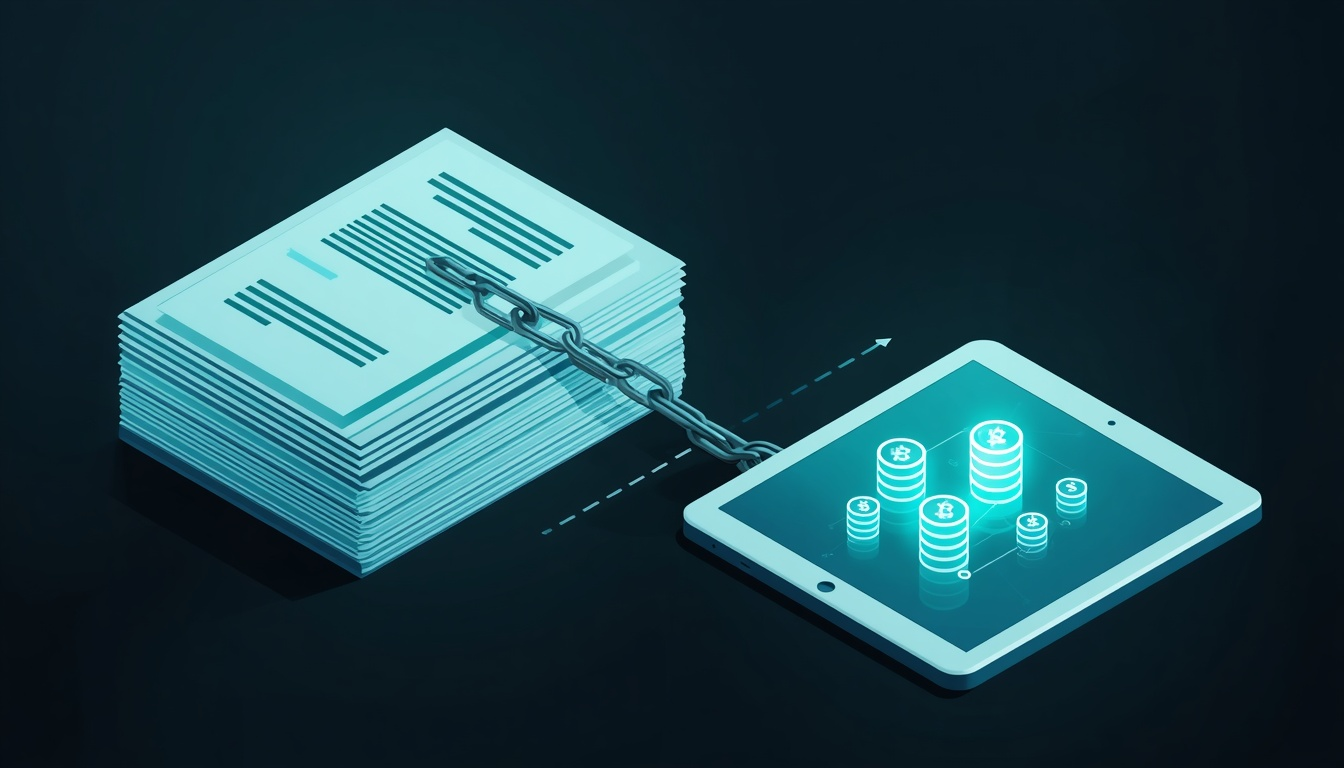
Not only the asset but also supporting documents – title deeds, lease agreements, building permits, insurance policies – can be tokenised as ERC‑1155 tokens. Each document receives a unique, verifiable fingerprint (hash) stored on‑chain, while the original file remains encrypted off‑chain. This creates a single source of truth that cannot be tampered with.
Real‑World Use Cases (Present and Near Future)
Rental Income Sharing
A property owner tokenises a building and distributes 60% of tokens to investors. Monthly rental income is automatically distributed to token holders via smart contracts – no manual calculations or wire transfers.
Construction Financing
A developer tokenises a future building’s revenue stream. Small investors buy tokens to fund the project, receiving a share of sales or rent once completed. This replaces costly bridge loans.
Real Estate Funds
Traditional real estate funds are illiquid and have high minimums. Tokenised funds can offer daily redemptions and allow investors to buy or sell any amount, anytime.
Cross‑Border Property Investment
A Chinese investor buys tokens of a warehouse in Rotterdam without dealing with foreign exchange controls, international wire delays, or local notaries. The tokens are held in a self‑custodial wallet.
Document‑Based Workflows
A property manager tokenises lease agreements, maintenance contracts, and insurance certificates. When a contractor finishes a repair, the completed work order is tokenised and linked to the property record. All parties see the same unalterable history.
Benefits Summary
| Stakeholder | Benefit |
|---|---|
| Small investors | Access to prime real estate with as little as €100. |
| Property owners | Unlock capital without selling the whole asset. |
| Developers | Reach a global pool of micro‑investors. |
| Regulators | Transparent ownership records, reduced fraud. |
| Lawyers / notaries | Automated contract execution, less manual paperwork. |
Challenges and the Path Forward
Tokenisation is not without hurdles – legal recognition of digital ownership, cross‑border securities laws, and user‑friendly platforms are still evolving. However, jurisdictions like Switzerland, Singapore, Saudi Arabia, and the EU (under DLT Pilot Regime) are creating clear frameworks. Platforms like Nobilior provide a no‑code tool for anyone to tokenise real estate documents and ownership rights using ERC‑1155, without needing a developer.
What This Means for You
Whether you are a property owner, an investor, a real estate agent, or a legal professional, tokenisation offers a way to reduce costs, increase transparency, and access a global market. The technology is live, the standards are mature, and the first pioneers are already tokenising apartments, hotels, and land.
Ready to explore tokenisation for your real estate assets? Nobilior’s tokenisation wizard lets you mint ERC‑1155 tokens for property titles, lease agreements, and investment contracts in minutes – no coding required.
Read more about Saudi Arabia RWA tokenization vision.
